
Cooking Croatian
My favorite recipes in time for Thanksgiving

Thank you for reading Accidental Istrian, a Substack about expanding your worldview by living in another country. (Specifically Croatia. More specifically, Istria.) Warm welcome to followers of The Maynard Grapevine—you can catch up on past posts here.
It’s eating season, so now seems like the perfect time to share some of the Croatian meals I’ve learned to make. I’ve come a long way since Rade begged me to bring home olives from the grocery store, imploring me with “I’m Mediterranean!” (And of course, needing olives on a regular basis.)
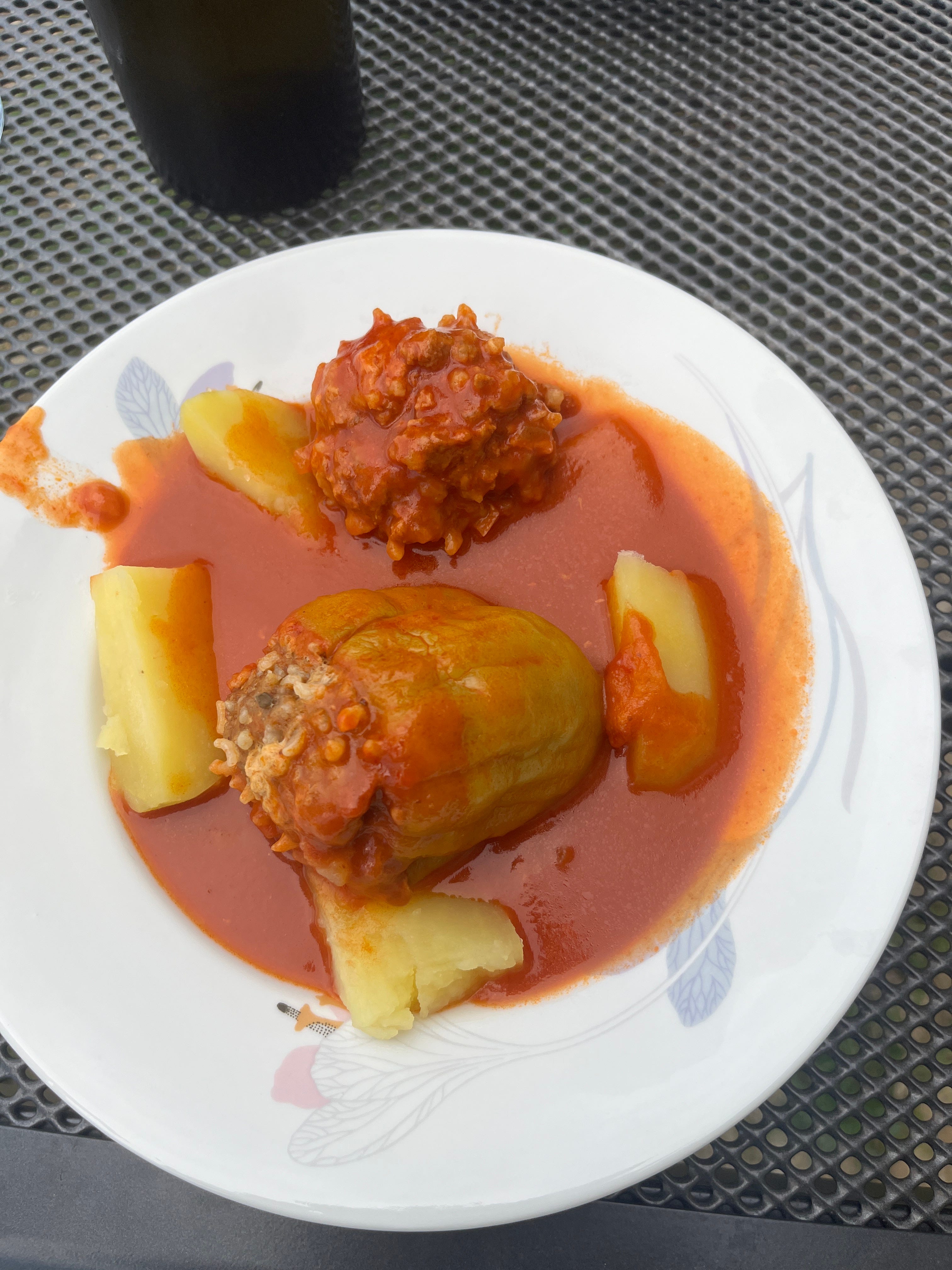
Punjene Paprike (Stuffed Peppers)
I was introduced to this delicious dish on my very first visit to Croatia when Vuka, Rade’s mom, made it for dinner. Of course, I’d had stuffed peppers before, but I noticed these were different right away.
The filling is what you might expect: “mince” (ground beef or ground beef and pork), rice, garlic, onions, and the cook’s preferred mix of spices (paprika, salt, pepper, or Vegeta).
But Croatians use babura peppers instead of bell. These bright yellow-green beauties are thinner skinned with a milder, sweeter flavor that I love. You usually find them during the warmer months, which is why I think of this as a summer dish.
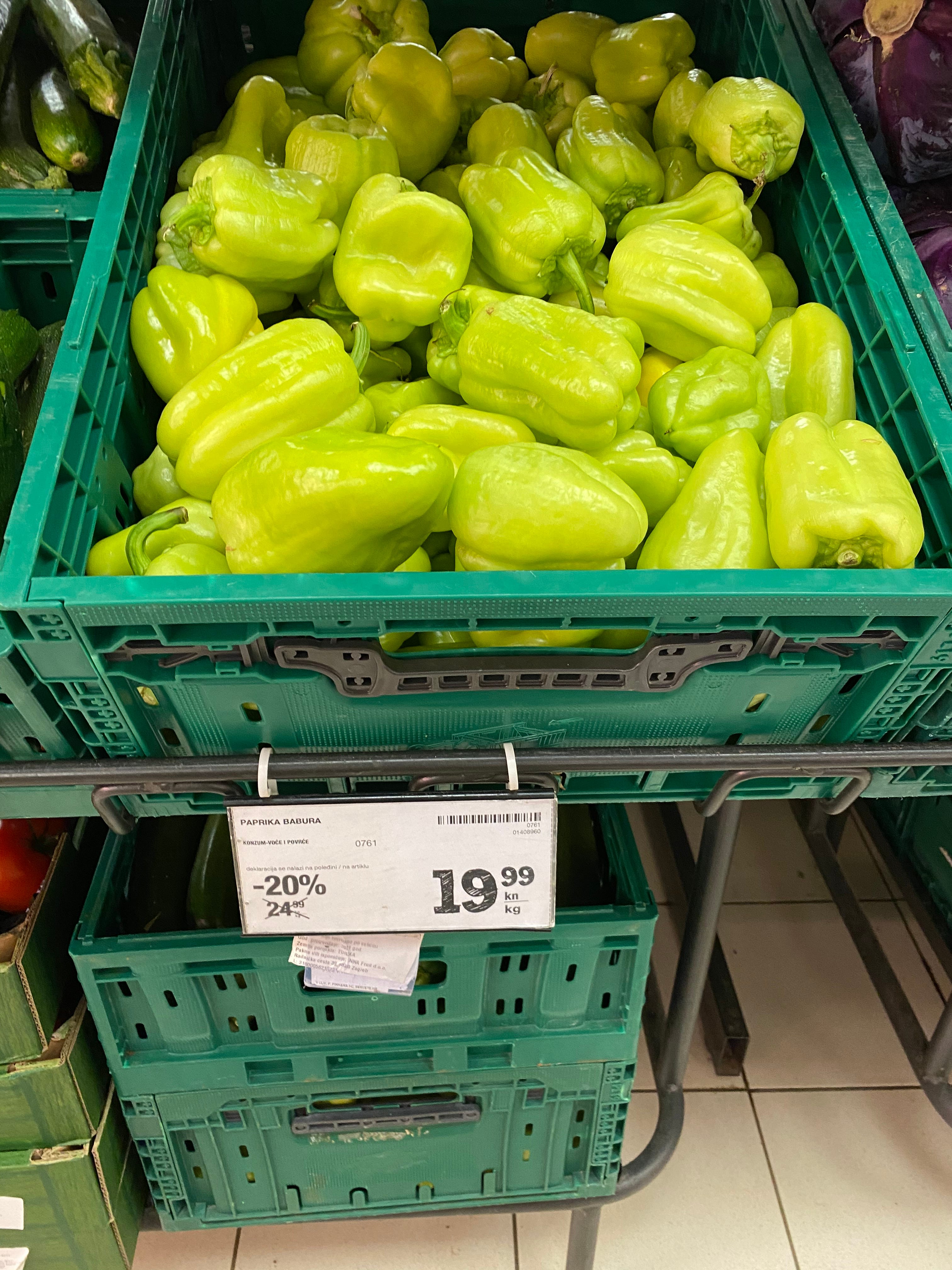
Once you make the filling, you stuff it into the peppers, then place them—and some canned tomatoes or passata (tomato purée) and water—in a dutch oven to cook on the stove. Too much mince? Nema problema. Mold it into ćufta (meatballs) and into the pot they go.
Served with boiled or mashed potatoes, stuffed peppers also have a savory tomato broth, which you must slurp up with a spoon. I’ve only seen it served at a konoba once, and there was a ton of slurping going on.
This is by far my favorite recipe I’ve learned to make, so when Vuka stayed with us this summer, I watched her carefully and took some notes.
Until that point, I’d been following a recipe from Croatian Classics, a cookbook translated into English I’d found online. Vuka deviated in two ways: She soaked the rice in water before adding it to the mix, and she put the finely diced onions into the sauce instead of the filling. So that’s what I do now.
Sarma (Stuffed Cabbage Rolls)
Considered Croatia’s national dish, sarma is punjene paprike’s cold-weather cousin. It has the same filling but instead of being stuffed into peppers, it’s tucked inside sour cabbage.
If you’ve ever tried to roll raw cabbage leaves into submission for cabbage rolls or stuffed cabbage, you’ll appreciate the beauty of sour cabbage. It’s basically sauerkraut but instead of ribbons it’s whole cabbage leaves.
As a kid, Rade had a neighbor who made his own, filling a barrel with whole cabbages and fermenting them with salt and water up in the building’s attic. When we first tried to replicate this recipe in the U.S., the directions said to freeze the cabbage to soften it. Of course, we hadn’t read that part in advance and had to muscle our way through with the stiff leaves.
Just like apple cider in the U.S., sour cabbage signals the start of fall when it appears in the grocery store’s produce section. The first time I saw the vacuum-sealed sour cabbage packages, I yelped with excitement. They were so much easier to handle—only a bit slippery—and had that briny sour taste that makes the dish.
And just like stuffed peppers, sarma is served with potatoes, either boiled or mashed. Extra filling can also be made into ćufta, but the OG recipe also calls for beef or pork ribs, which makes the tomato-flavored broth extra rich. (Gilding the lily, if you ask me.)
Last year in the States, Rade made his own sour cabbage using one of those Colonial-looking brown crockery pots we got from Ann, who I call my adopted mom or great aunt, but is really my ex-step-grandmother. We ate sarma 5 or 6 times last winter. I prefer the peppers to the cabbage, but it’s safe to say sarma is Rade’s favorite.
Blitva (Swiss Chard)
Bitva or swiss chard wasn’t something I ate regularly growing up, even though my grandfather (the one formerly married to Ann) grew it in his garden. He always called it “swift charge” in that silly way he had—and it always made me laugh.
If you’re eating fish in Croatia, you must have blitva. That’s the rule. And it’s so ingrained that one time Vuka served blitva alongside chicken and said, “Pretend it’s fish!” She and my grandfather would have gotten along, I think.
I’ve learned the hard way that you can never have enough blitva because it boils down to nothing. Whenever I see someone holding an armful of it in the grocery store, I think, smart!
The recipe is super simple and flavorful. You boil potatoes and swiss chard, then sauté some garlic in olive oil and mix it all together, adding more oil if you like.
I peel, dice, then boil the potatoes along with the tough stems in salted water, waiting a few minutes before adding the leaves. I used to chop the leaves until I learned that Vuka snips them after they’re cooked, though I’m not sure why. Anyway, I use kitchen shears to do the same now.
Maneštra od Bobići (Bean Soup with Corn)
Maneštra is an Istrian specialty. The first time I had it though, I wasn’t a fan. I remember thinking it was going to be like minestrone. The name might be similar to that of its Italian neighbor, but the Croatian version is completely different. I also found the brown color off-putting.
Later on, when we did the Teran Wine & Walk, I had an exquisite bowl of creamy, nutty goodness that changed my mind.
The recipe is made with borlotti beans, a variety of the cranberry bean, and corn shucked off the cob, so it’s a late summer/early fall dish. There are lots of recipes online but the one I follow from Croatian Classics is simple: beans, corn, parsley, garlic, diced pancetta, a tomato without skin, bay leaf, and water. Again, you can add some ribs but it’s hearty enough without them.
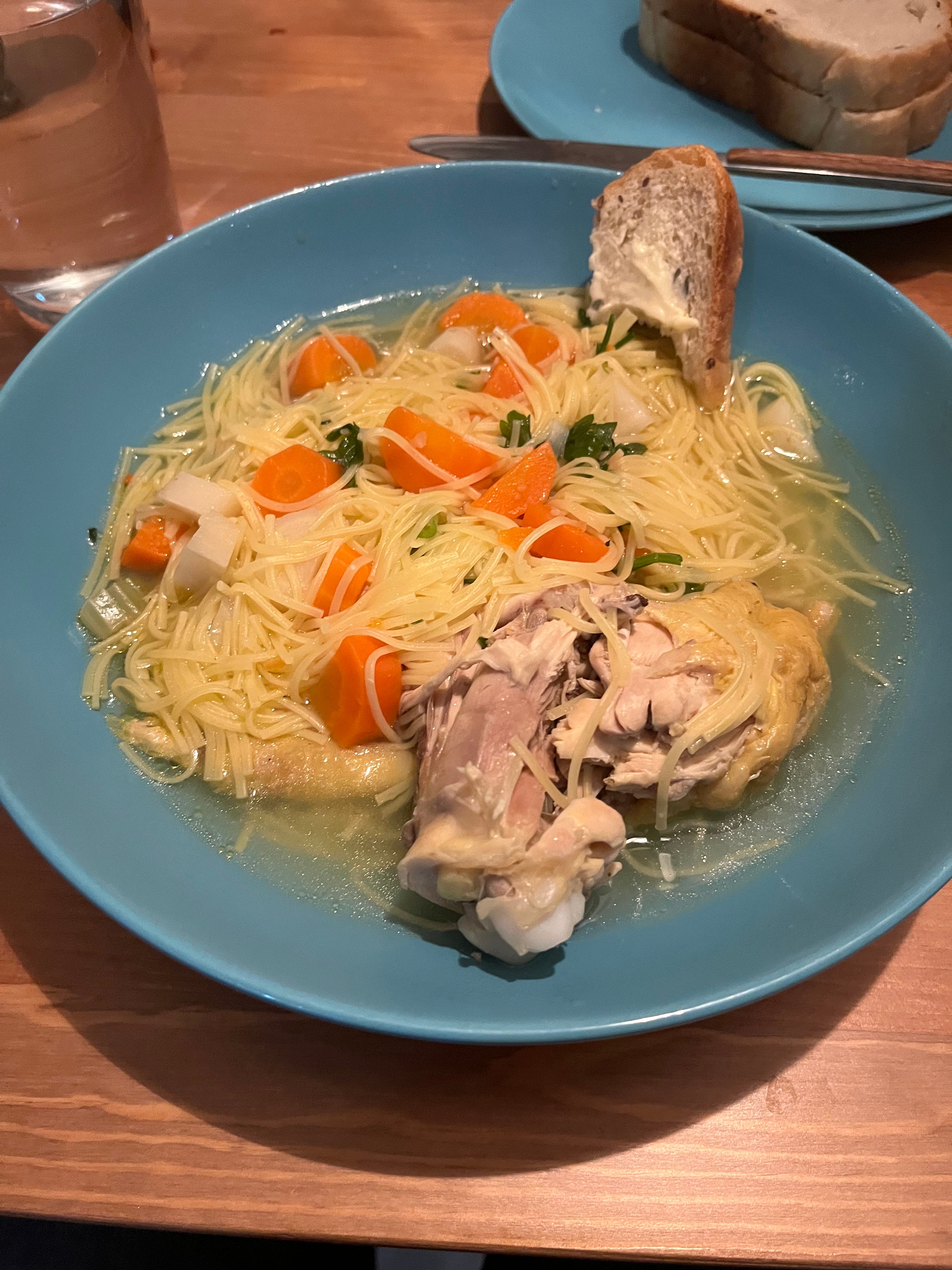
Pileća Juha (Chicken Soup)
On one visit to Rade’s mom’s, Vuka asked Rade what he wanted for lunch. I couldn’t believe he asked her to make chicken soup! Wouldn’t that take forever?
Well, less than 30 minutes later, she came out of the kitchen with a deliciously light yet satisfying chicken noodle soup. Turns out, there’s a hack built into the recipe.
Instead of a whole chicken, you boil a few bone-in pieces: thighs or drumsticks. There’s no need to add bouillon—the broth just comes together. At the grocery store, they sell packages of celery, parsley root, and parsley just for soup.
I tend to take recipes as suggestions. After all, isn’t that how someone invented a recipe? So here’s how I make it. After sautéing some onions in olive oil, I brown both sides of the chicken in the pot. Then I add some carrots, cover it with boiling water from the kettle and let it cook for 20-25 minutes. The last step is to add some fresh parsley and thin, quick-cooking noodles.
Rižoto od Lignji (Squid Risotto)
I never thought I could make squid risotto at home because when I had it out, it was always black with squid ink. I didn’t want to think about how to do that.
But one thing I can always find at the grocery store is frozen squid, so I searched online and found this super easy recipe with no ink whatsoever. (And now I know why. When I fact checked this post, I learned that Crni Rižot (Black Risotto) is actually not made with squid ink—it’s made with cuttlefish ink.)
I was secretly thrilled when I made it for Vuka and got the nod of approval. Especially because the first time I cooked for my mother-in-law, I made a horrible bolognese, and the second time, my polenta was dry.
The reason people always say “love is the secret ingredient” is because when you’re jet-lagged, using an unfamiliar kitchen, or just aren’t in the mood to cook, it shows.
Season’s Eatings!
Sometimes I think about what it would be like to make a traditional Thanksgiving dinner—turkey and all the trimmings—in Istria.
I’m a bit of a purist and like it the way I like it: traditional New England style. As a kid we went to a friend’s whose mom was from Spain and she made rice stuffing and my sister Liz and I COULD NOT EVEN.
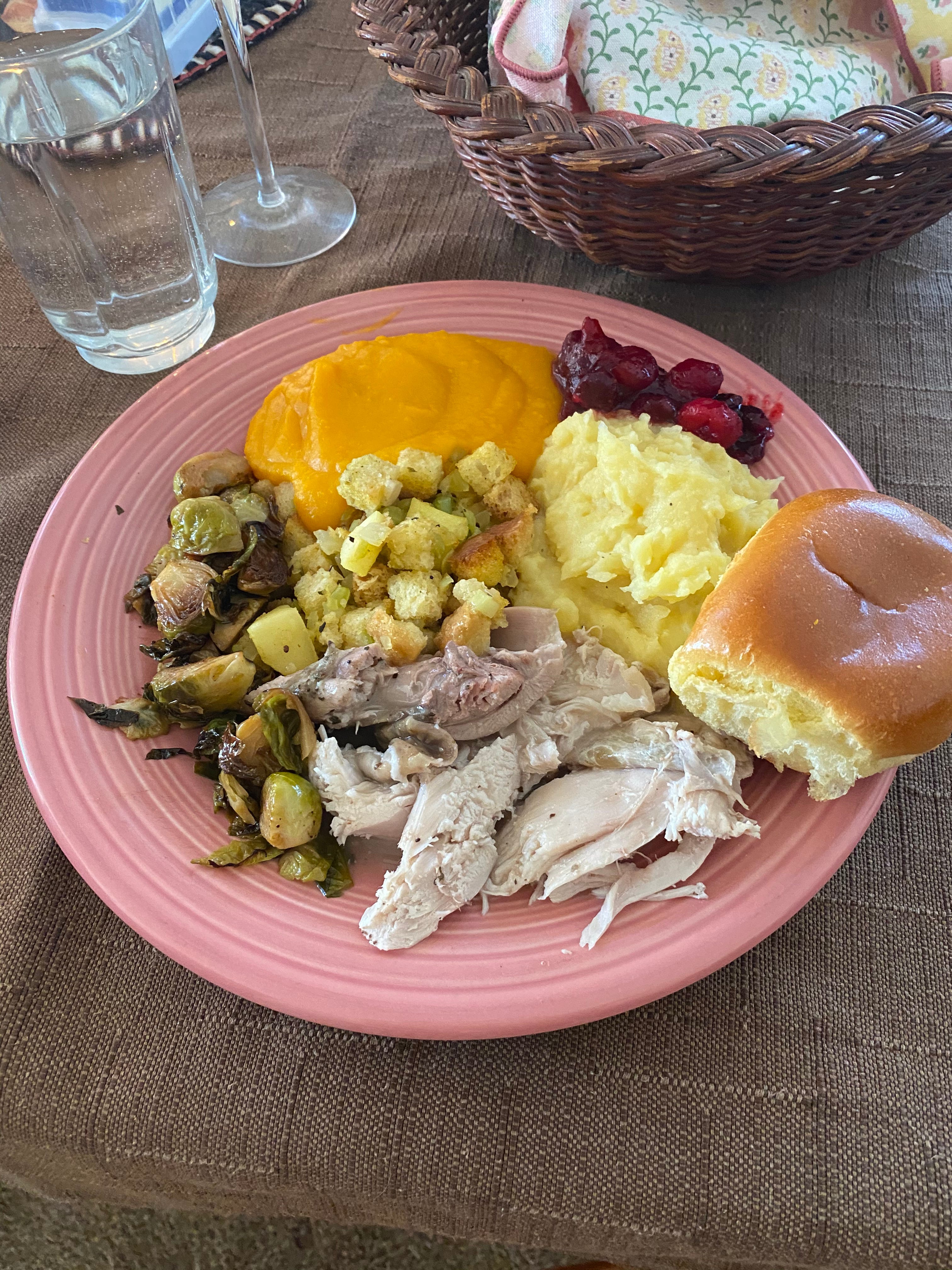
If we ever do host Thanksgiving in Istria, we’d have to order a turkey from a butcher—they don’t take over the freezer section like they do in America this time of year.
Not to mention figure out a way to find whole cranberries. Those are a must—I make cranberry sauce every year from scratch. I’d have to bring some on the plane or research European cranberry bogs, I suppose. Unless someone knows where to find them?
Merry Christmas and a happy healthy new year to you all! Your stuffed peppers and stuffed cabbages are similar to the recipes I used that were so “ethnic” back in the day. I remember using ground turkey breast hoping it would be considered healthier but after one try I was back to my babcia’s recipe, a mix of veal, beef, and pork. And whatever form of tomato (stewed, whole canned, fresh, soup) was in the pantry. I make them now in bulk and freeze them in pairs for single meals. Can you maybe find Cubanelle peppers? The taste sounds similar to your description, are used lots in Italian cooking. But they aren’t shaped the same…oh well. Our holidays were delightful but for missing the Chicago gang of two. Was sweet to chat with them. We are getting elderly (84 and 86 now, my favorite time of year when he is two years older than I!) and have signed on for senior living places nearby. I’m hoping they never call as I’ve not been pleased with the tours of the places we’ve been. I love the Quaker one but Bruce was not impressed. What will be will be. Take care. Be well. Hug the young ones for me when you see them. They are good people.
The bean/corn soup looks really good!